


Official Name: Mauritania
Nouakchott
Arabic
Mauritanian ouguiya
OUR SERVICES;
- Consultation (in person, online, phone)
- Helping to prepare your documents
- Start to finish your company registration process
- Immigration services

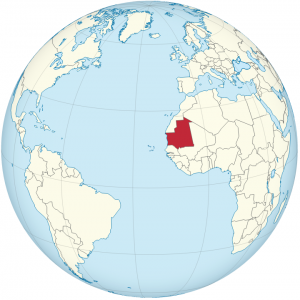
Mauritania
Mauritania, located in northwest Africa, has a rich history, diverse culture, challenging economy, and a unique political landscape. From ancient civilizations to colonial rule, independence, and the pursuit of democratic governance, Mauritania’s historical journey has shaped its identity and influenced its present circumstances.
Mauritania’s history dates back thousands of years, with evidence of human habitation in the region since prehistoric times. The area was once part of the ancient empires of Ghana, Mali, and Songhai, which were important centers of trade and Islamic scholarship. European powers, including the French, established colonial rule over Mauritania in the late 19th century. Mauritania gained independence from France in 1960.
Mauritanian culture is a blend of Arab-Berber and West African influences. The population consists of several ethnic groups, including the Moors (Arab-Berber), Wolof, Soninke, and Fulani. The majority of the population follows Islam, which has a profound influence on Mauritanian society, customs, and daily life. Traditional music, dance, and poetry are important cultural expressions, with unique instruments such as the tidinit (a stringed instrument) and the ardin (a harp-like instrument) being prominent in Mauritanian music.
The economy of Mauritania is primarily based on agriculture, livestock farming, and mining. The country is known for its export of iron ore, fish, and agricultural products such as dates, millet, and sorghum. However, Mauritania faces economic challenges, including a reliance on vulnerable sectors, limited infrastructure, and high levels of poverty. Efforts are being made to diversify the economy, promote private sector development, and attract foreign investment in areas such as tourism and renewable energy.
Politically, Mauritania has experienced periods of both military rule and democratic governance. After independence, the country faced political instability, including military coups and authoritarian regimes. However, since the early 2000s, Mauritania has made progress toward democratic governance. The President, who is elected through a popular vote, serves as the head of state. The government is focused on improving governance, promoting human rights, and addressing social and economic issues such as poverty, education, and healthcare.
As Mauritania looks to the future, it faces the challenges of promoting inclusive development, reducing poverty, and addressing social inequalities. Efforts are underway to improve education and healthcare services, enhance infrastructure, and strengthen democratic institutions. Mauritania is also actively involved in regional and international organizations such as the Arab League, the African Union (AU), and the Economic Community of West African States (ECOWAS).
The history, culture, economy, and politics of Mauritania contribute to its unique identity and potential for growth. While facing challenges, the country’s cultural diversity, natural resources, and strategic location offer opportunities for development and progress. Mauritania’s commitment to democratic governance, economic diversification, and social development positions it as a nation with aspirations for a brighter future.
General Questions
How long does it take to register a company?
Two weeks to a month
What is the minimum capital required to register a company?
US $ 3,500
Do we have to be in Mauritania to register a company?
No. no need.
What is the corporate tax?
25 %
Are investors or companies allowed to buy real estate?
Yes. They can buy land and real estate.
The benefit of company registration in Mauritania
- Company registration can be done with one shareholder and one director.
- Shareholders and managers of the company can be of any nationality.
- The minimum capital of the company is $ 3,500.
- Shareholders and directors do not need to be physically present to register a company.
- There are no restrictions on investing in any field.
- The costs of running a company in Mauritania are low.
- Employee salaries, below $ 100 per month.
- The third largest iron producer in the world.
- Daily production of 75,000 barrels of oil.
- Having natural resources of gold, copper, oil and gas.
- 700 km wide border with the Atlantic Ocean.
The disadvantage of company registration in Mauritania
- All company documents must be translated into the official language of Mauritania (Arabic and French).
- Hard communication of investors from other countries with officials and employees.
- Very high corporate tax of 25% compared to some countries.
- High corruption and complex bureaucracy and lack of transparency.
- Lack of proper infrastructure for starting a business such as inadequate transportation, lack of proper electricity and communication system.
- Poor ranking of 134 out of 141 in the world competition.
Type of company registration
- Limited Liability Company (SARL)
- Public Limited Company (SA)
- Free Zone
- Limited Partnership
- Foreign branches
The company registration process
- Submit a company registration application and specify the proposed name and field of activity
- Preparation and adjustment of the company’s articles of association, including the approved name, type of company, type of company activity, names of shareholders and directories, address and telephone number of the company
- Opening a bank account in the name of the company and depositing the initial capital of the company and submitting a deposit to the company registration office
- Register the company in the notary
- Registration of a company in the Greffe du Tribunal de Commerce
- Complete the tax file and get the exclusive tax code for the company
- Register and complete the application with the Social Security
- Administration at the Caisse Nationale de Sécurité Sociale
- Obtaining a labor office license
